Along the roads of Europe
Birth of the Europe of Peoples
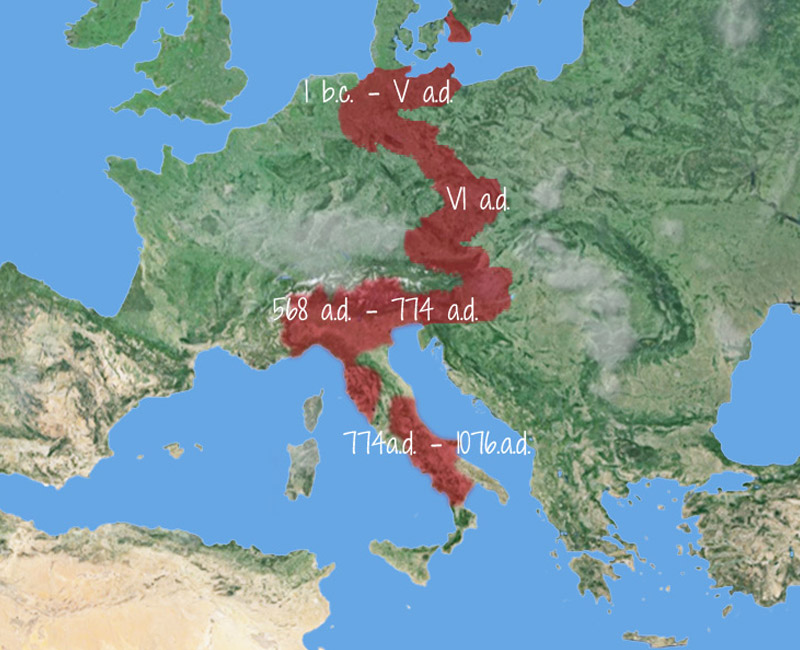
From a cultural perspective, European institutions aim—in principle—to highlight the cultural elements that enrich the peoples of Europe today and to strengthen the sense of belonging among modern "European citizens" by identifying shared historical and cultural roots. The "Longobard Ways across Europe" Route—which boasts historical precedence as well as potential for collaboration with other existing European routes—acts as a further active participant in this overarching European program of cultural promotion. Indeed, the migratory journey undertaken by the Lombards over the course of their epoch-making trek from the Northern seas to the Mediterranean highlights the formative era of Europe as a distinct entity (no longer viewed merely as a geographical expression) and fosters an appreciation of Longobard culture as a "primary root of European culture, subsequently developed by the Carolingians" (UNESCO, 2011).